A baby stroller is one of the most essential baby gear investments for every family. It accompanies daily neighborhood walks, weekend outdoor trips, shopping runs, and long-distance travels. However, with dozens of stroller types, countless functional features, and various safety standards on the market, most new parents feel confused about how to choose a baby stroller that fits their family’s needs.
Many parents either overspend on fancy unnecessary functions or buy cheap, low-quality strollers that are unsafe and inconvenient. In this complete baby stroller buying guide, we will cover stroller types, core purchasing criteria, safety standards, age-based selection tips, and common mistakes to help you make a cost-effective and correct choice in 2026.
Step 1: Know Different Types of Baby Strollers & Their Uses
The first rule of choosing a baby stroller is to match the stroller type with your daily lifestyle. Each stroller category has unique pros, cons, and applicable scenarios.
1. Full-Size Standard Strollers
Full-size strollers are the most well-rounded option, designed for long-term daily use from newborns to 3–4-year-old toddlers. They feature spacious cabins, multi-angle reclining seats, large storage baskets, sturdy frames, and excellent shock absorption. Most models support flat lying mode, which meets newborn sleeping needs perfectly.
Best for: Daily walks, family outings, parents with only one stroller budget, newborn babies
Pros: Comfortable, stable, high safety, complete functions, long service life
Cons: Heavy and bulky, not easy to carry on planes or cars
2. Lightweight & Umbrella Strollers
Lightweight strollers usually weigh under 6kg, with a compact one-hand fold design. Umbrella strollers are ultra-portable and can be folded into a slim shape like an umbrella. They are ideal for families who frequently go out or travel.
Best for: Travel, shopping, short-distance outings, families who often drive or take public transport
Pros: Ultra-light, space-saving, easy to carry, affordable
Cons: Limited recline angle, smaller storage space, average shock absorption, not all suitable for newborns
3. Travel System Strollers
A travel system includes a stroller frame plus a detachable infant car seat. The car seat can be directly installed on the stroller without waking the sleeping baby, realizing seamless switching between car and stroller.
Best for: Families who drive frequently, newborns under 15 months
Pros: Super convenient for car travel, no need to move babies frequently
Cons: Higher price, the car seat can only be used for a short baby stage
4. Jogging Strollers
Jogging strollers adopt large inflatable wheels and professional suspension systems, with excellent shock absorption and smooth maneuverability. They can adapt to rough roads such as grass, gravel, and country roads.
Best for: Outdoor sports, jogging, hiking, suburban families
Pros: Ultra-smooth pushing, strong shock resistance, stable on bumpy roads
Cons: Large size, heavy weight, inconvenient for indoor and city road use
5. Double Strollers
Double strollers are designed for twins or siblings with a small age gap, available in side-by-side and tandem seating styles.
Best for: Families with two kids
Pros: Take two kids out at once, labor-saving
Cons: Wide body, not easy to pass narrow doors and elevators
Step 2: Core Buying Criteria for a Safe & Comfortable Baby Stroller
After confirming the stroller type, focus on these key factors to filter high-quality, practical strollers and eliminate inferior products.
1. Safety Performance (Top Priority)
Baby stroller safety is always the first purchasing factor. Never sacrifice safety for low prices or lightweight design.
- Harness System: Choose a 5-point safety harness (shoulder + waist + crotch buckle) instead of a 3-point one. It can fix the baby’s body comprehensively and prevent slipping or turning over during bumpy rides.
- Brake Design: One-touch double brakes are the safest choice, which can lock the rear wheels quickly on slopes to avoid sliding risks. Avoid single-wheel brake designs with poor stability.
- Frame Structure: Prefer sturdy aluminum alloy frames, which are lightweight yet pressure-resistant. Check whether the frame has sharp edges, loose gaps, or unstable shaking.
- Safety Certification: Prioritize strollers that pass international safety certifications, ensuring compliance with standard production processes.
2. Riding Comfort for Babies
A comfortable stroller avoids baby crying and fussy moods during outings, which is especially important for long-time rides.
- Recline Function: For newborns, a 170°–180° flat recline is mandatory to protect the baby’s spine and ensure safe sleeping. Toddlers can adapt to multi-angle adjustable recline for sitting and resting.
- Shock Absorption: Front-wheel shock springs + inflatable rear wheels are the best combination, which effectively buffer road bumps and protect the baby’s delicate brain and spine.
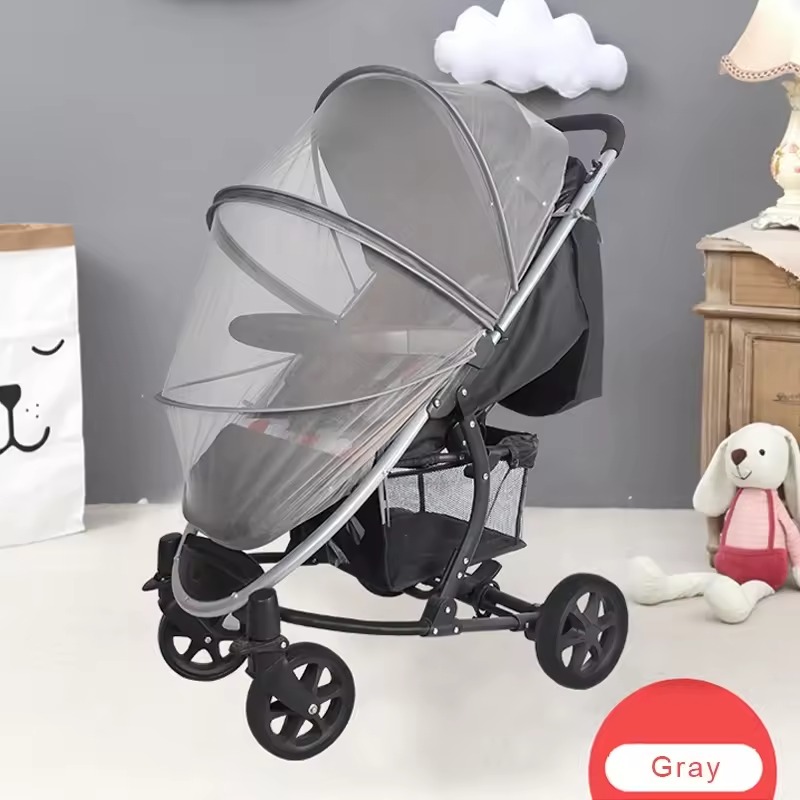
- Canopy Coverage: An extended UV-protective canopy with a breathable mesh window can block strong sunlight, wind, and light rain, creating a safe and shaded space for babies.
- Seat Space: Choose a spacious seat with enough height and width to adapt the baby’s growing body and avoid crowding.
3. Parent-Friendly Practicality
A good baby stroller should save parents’ energy, not increase their burden.
- One-Hand Fold: This core practical function allows parents to fold or unfold the stroller with one hand while holding the baby, super convenient for daily use.
- Storage Capacity: A large under-seat basket and rear hanging pockets can store diapers, water bottles, toys, and shopping items, reducing the need for carrying extra backpacks.
- Wheel Maneuverability: 360° rotating front wheels make it flexible to turn and push, suitable for supermarkets, sidewalks, and elevators. Lockable front wheels ensure stability on straight roads and slopes.
- Washable Fabric: Baby strollers are prone to stains. Removable and machine-washable seat fabrics greatly facilitate daily cleaning.
4. Portability & Scenario Adaptation
Match the stroller’s weight and folding size with your main usage scenarios:
- Daily home & neighborhood use: Prioritize full-size strollers with full functions and high comfort, no need to pursue ultra-light weight.
- Frequent travel & driving: Choose lightweight strollers that can be put into car trunks and airplane overhead compartments.
- Outdoor country & bumpy roads: Select jogging strollers with strong shock absorption and large wheels.
Step 3: Age-Based Stroller Selection Guide
Babies of different ages have completely different stroller needs, which helps you quickly narrow down your choices.
0–6 Months (Newborns)
Newborns have soft spines and cannot sit independently. Must choose strollers with 180° full flat recline, 5-point safety harness, and excellent shock absorption. Travel systems and full-size strollers are the best choices; avoid ultra-light umbrella strollers without flat recline function.
6–18 Months (Infants)
Babies can sit steadily and have more outdoor activities. You can choose multi-functional full-size strollers or lightweight strollers with adjustable recline, focusing on safety and flexibility.
18 Months–4 Years (Toddlers)
Toddlers move actively and rarely lie down. Portable lightweight strollers and umbrella strollers are sufficient, prioritizing easy folding and labor-saving pushing.
Step 4: Common Stroller Buying Mistakes to Avoid
- Blind pursuit of ultra-light weight: Excessively light strollers usually sacrifice shock absorption and stability, which is unsafe for newborns.
- Overbuying fancy functions: Many strollers are equipped with useless decorative functions such as music lights, which increase prices but have no practical value.
- Ignoring brake quality: A poor brake system is the biggest hidden danger of stroller slipping accidents, never ignore this detail.
- Neglecting cleaning convenience: Non-removable fabrics will breed bacteria after long-term use, affecting baby’s skin health.
FAQs About Choosing a Baby Stroller
Q1: Is a travel system stroller worth buying?
Yes for families who drive daily. The detachable car seat avoids waking sleeping babies during transfer, greatly improving travel convenience. For non-driving families, a regular full-size stroller is more cost-effective.
Q2: Are lightweight strollers safe for newborns?
Only lightweight strollers with 180° flat recline and 5-point harness are suitable for newborns. Ordinary umbrella strollers without flat lying function are not recommended for babies under 6 months.
Q3: How much should I spend on a baby stroller?
Mid-range strollers with complete safety configurations and basic functions are the most cost-effective. There is no need to pursue luxury brands with redundant functions, nor buy ultra-cheap strollers with unqualified safety standards.
Final Thoughts
Choosing the right baby stroller does not depend on the most expensive or the most fashionable style, but on whether it matches your baby’s age, family living habits, and daily outing scenarios. Always takesafety first, comfort second, and practicality third as your core buying principle.
By following this 2026 baby stroller buying guide, you can avoid blind consumption, pick a durable and user-friendly stroller, and make every outdoor trip with your baby relaxed and pleasant.
Target Keywords: how to choose a baby stroller, baby stroller buying guide, best baby stroller for newborns, types of baby strollers