Entering the baby feeding market is a smart move for American brands looking to expand their reach. The industry for Private-Label Toddler Sippy Cups is booming, with valuations expected to climb from $2.1 billion in 2026 to $3.3 billion by 2033. You do not need to build your own factory to capture this growth.
By partnering with experienced manufacturers, you can offer high-quality, customized products that stand out on store shelves. This guide covers everything from material safety and regulatory compliance to effective marketing strategies.
Whether you are refining your design or scaling production, we are here to help. For expert advice or a custom quote, please visit iJoyRen, reach out via WhatsApp, or email joan@bebecares.com to discuss your vision for these Private-Label Toddler Sippy Cups.
Key Takeaways
- The market for feeding products is projected to reach $3.3 billion by 2033.
- Outsourcing manufacturing allows brands to scale without heavy infrastructure costs.
- Regulatory compliance and material safety are essential for consumer trust.
- Customization helps your brand differentiate itself in a competitive landscape.
- Professional partners like iJoyRen provide the support needed for a successful product launch.
Understanding Private-Label Products
If you are looking to launch your own brand, private labeling offers a streamlined path to market entry. By partnering with experienced manufacturers, you can focus on building your brand identity while experts handle the technical side of production.
What Are Private-Label Toddler Sippy Cups?
Private-labeling involves selling products manufactured by a third party under your own brand name. When you invest in Private‑Label Toddler Sippy Cups, you are essentially taking a high-quality, pre-designed product and applying your unique branding to it.
This approach allows you to enter the market quickly without the need for massive research and development budgets. Utilizing ODM Baby Lifestyle Goods ensures that your products meet industry standards while reflecting your specific vision for your company.
Advantages of Private-Label Products
The primary benefit of this model is the significant reduction in manufacturing complexity. You maintain full control over your brand presentation, packaging, and product specifications without needing to manage a factory floor.
Efficiency is key in the competitive baby goods sector. By working with a professional partner, you can ensure that your items are ready for retail shelves or e-commerce platforms with minimal friction.
The Process of Private-Labeling
The journey from concept to consumer is a coordinated effort that covers several vital stages. Suppliers typically assist with design files, prototypes, tooling, production, and final retail packaging.
- Design and Prototyping: Refining your vision into a functional product.
- Tooling: Creating the molds necessary for manufacturing.
- Production and Inspection: Ensuring every unit meets strict quality benchmarks.
Regarding order quantities, existing tooling often allows for smaller batches starting at approximately 20 pieces. If you require custom shapes or features, new tooling projects typically begin around 1,000 pieces.
For more information on how to start your journey, visit ijoyren.com. You can also reach out via WhatsApp or contact us directly at joan@bebecares.com to discuss your specific needs for ODM Baby Lifestyle Goods.
Compliance and Safety Standards
Navigating the complex world of safety regulations is a vital step for any brand launching new baby products. Before you introduce your items to the market, you must ensure that every piece of documentation is prepared to meet international standards. Planning these requirements early prevents costly delays and protects your reputation with parents who prioritize safety above all else.
Importance of CE Compliance
The CE mark is often misunderstood as a general quality seal, but it is actually a mandatory conformity declaration. It signifies that your items meet the essential health and safety requirements set by European directives. For drinking equipment, you must adhere to the EN 14350 standard, which covers materials, structural integrity, and performance for children aged 0–48 months.
To successfully sell in the European market, you need to maintain a comprehensive technical file. This file serves as proof that your products have undergone the necessary testing. You can learn more about these requirements by reviewing this ISO 9001 CE sippy cups compliance to ensure your business remains fully compliant.
Understanding CPSIA Regulations
If you are targeting the United States, the Consumer Product Safety Improvement Act (CPSIA) of 2008 is the primary framework you must follow. This act establishes strict requirements regarding lead content and phthalate restrictions in all baby products. Compliance is not optional; it is a legal necessity for selling in the U.S. market.
Key requirements under CPSIA include:
- Third-party testing: Products must be tested by an accredited laboratory.
- Lead limits: Strict caps on lead content in surface coatings and substrates.
- Phthalate restrictions: Prohibitions on specific chemicals used to soften plastics.
- Supporting records: Maintaining detailed test reports and certificates of conformity.
Ensuring Safety in Toddler Products
Safety extends beyond initial testing to include ongoing traceability and clear communication. The EU General Product Safety Regulation (GPSR), effective since December 2024, mandates that manufacturers provide clear product identification and contact information on all packaging. This ensures that if an issue arises, the product can be traced back to its source immediately.
If you need expert guidance on navigating these safety hurdles, feel free to reach out to our team at ijoyren.com. You can also contact us directly via WhatsApp or send an email to joan@bebecares.com for personalized support. We are committed to helping you bring safe, high-quality baby products to families everywhere.
Features of Quality Sippy Cups
Quality sippy cups are more than just simple containers; they are essential lifestyle goods that support a child’s development during their transition from bottles. When families choose products for their little ones, they prioritize safety, ease of use, and long-term durability. Providing reliable options helps build trust in your brand.
Materials Used in Toddler Sippy Cups
The choice of material significantly impacts the safety and longevity of your lifestyle goods. Parents today are highly educated about chemical safety and often seek non-toxic alternatives.
- Food-grade silicone: Highly flexible, heat-resistant, and gentle on developing gums.
- Stainless steel: Offers superior durability and keeps liquids at a consistent temperature.
- BPA-free plastic: Lightweight and transparent, making it a budget-friendly choice for daily use.
Design Considerations for Toddlers
Ergonomics play a vital role in how well a child interacts with their cup. Small hands require easy-to-grip handles that provide stability during independent drinking sessions. You should also consider the developmental stage of the child when selecting spout types.
Soft silicone spouts are ideal for younger toddlers, while hard spouts or straw designs work better for older children. Ensuring that these components are easy to sterilize is a major selling point for busy parents. For custom manufacturing inquiries, you can visit ijoyren.com or reach out via WhatsApp.
Leak-Proof Technology
Effective leak-proof technology is the hallmark of premium lifestyle goods. Nobody wants a messy bag or a stained carpet, so integrating advanced valves and seals is critical for customer satisfaction.
Gravity-ball straws allow children to drink from any angle, which is a highly requested feature in modern designs. While these complex parts reduce spills, they must remain easy to disassemble for thorough cleaning. If you need assistance with product development or sourcing, please contact joan@bebecares.com for expert guidance.
Choosing the Right Manufacturer
Navigating the world of manufacturing for baby essentials requires a strategic approach to vetting potential partners. Your choice of factory will directly influence the quality, safety, and marketability of your Private‑Label Toddler Sippy Cups. A reliable partner ensures that your vision translates into a product that parents trust.
Factors to Consider in a Manufacturer
When assessing a potential supplier, you must look beyond simple pricing. Evaluate their technical capabilities, including tooling resources and material control systems. It is vital to confirm that they can handle your required production volume while maintaining consistent quality standards.
Consider the following table to help organize your evaluation process:
| Criteria | Importance | Goal |
|---|---|---|
| Factory Experience | High | Proven track record |
| Material Safety | Critical | Certified non-toxic |
| Production Capacity | Medium | Scalable output |
| Lead Times | High | Reliable delivery |
Evaluating Manufacturer Credentials
Credentials serve as a benchmark for a factory’s commitment to excellence. For instance, companies like Jution Silicone bring over 16 years of industry experience to the table. They maintain rigorous standards by holding certifications such as ISO 9001, ISO 14001, SA8000, BSCI, and SEDEX.
These certifications indicate that a manufacturer prioritizes both quality management and ethical labor practices. Always request documentation to verify that these credentials are current and applicable to your specific product line.
Building a Relationship with Your Manufacturer
A successful partnership relies on clear communication and structured processes. Start by establishing written specifications and signing confidentiality agreements to protect your unique designs. You should also implement a rigorous sampling phase to ensure the final product meets your expectations before full-scale production begins.
“Quality is never an accident; it is always the result of high intention, sincere effort, intelligent direction and skillful execution.”
Maintain an open line of communication for regular production updates. If issues arise, having a clear corrective-action procedure in place will save time and resources. For inquiries regarding production support, you can reach out via their website, contact them on WhatsApp, or send an email to joan@bebecares.com to discuss your needs for Private‑Label Toddler Sippy Cups.
Customization Options
Transforming standard baby gear into a unique brand identity requires careful attention to detail. By focusing on specific design elements, you can create a product family that resonates with parents and stands out on retail shelves.
Unique Designs and Branding
The silhouette of your sippy cup is the first thing customers notice. You can customize handle configurations, spout shapes, and straw types to match your brand’s specific ergonomic goals. Strategic logo placement is equally vital for brand recognition.
Consider using embossed or debossed tooling to add a tactile, premium feel to your products. These permanent branding methods ensure your logo remains visible even after extensive use and cleaning.
Colors and Themes for Sippy Cups
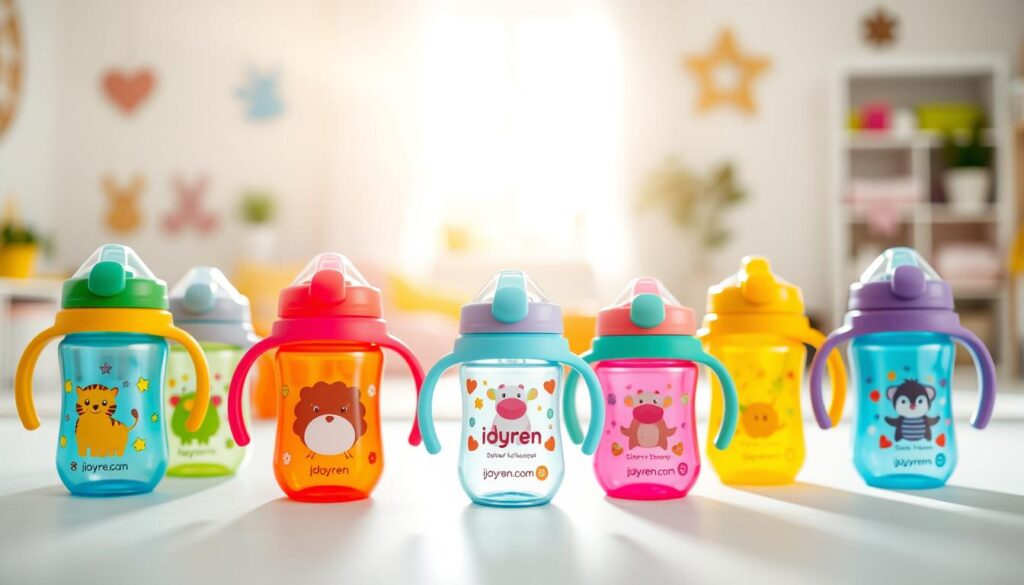
Visual appeal drives many purchasing decisions in the baby gear market. You can utilize Pantone matching to ensure your brand colors are consistent across every batch. Whether you prefer solid colors, double-color designs, or trendy marble effects, the choice should align with your target demographic.
Different printing methods offer varying levels of durability and complexity. Choosing the right technique is essential for maintaining the high quality your customers expect.
| Method | Visual Impact | Durability | Cost |
|---|---|---|---|
| Screen Printing | High | Moderate | Low |
| Pad Printing | Moderate | High | Moderate |
| In-Mold Labeling | Very High | Excellent | High |
Packaging Alternatives for Private-Label Products
Your packaging is the final touch that completes the unboxing experience. Practical formats like eco-friendly boxes or windowed displays can highlight the features of your baby gear effectively. Always approve physical samples and packaging prototypes before committing to large-scale production to ensure everything meets your standards.
If you need assistance with your customization journey, feel free to visit ijoyren.com for more information. You can also reach out via WhatsApp at https://wa.link/b88mcs or send an email to joan@bebecares.com to discuss your specific needs.
Marketing Your Private-Label Sippy Cups
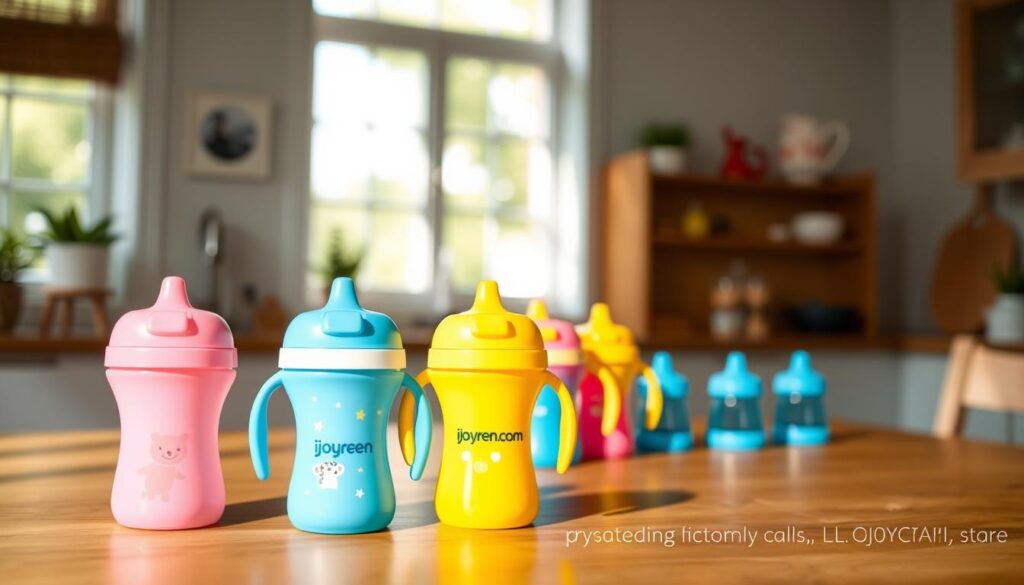
Connecting with modern parents involves showcasing the real-world benefits of your toddler feeding solutions. When you offer custom design baby products, you are not just selling a cup; you are providing a tool that supports a child’s developmental transition. Clear messaging about safety and convenience helps build trust with your target market.
Targeting Your Audience Effectively
To reach the right people, you must understand the specific needs of U.S. parents, boutique retailers, and gift-focused businesses. Your marketing should highlight features that solve everyday parenting challenges, such as leak-resistant performance and easy cleaning. By focusing on these pain points, you position your brand as a reliable partner in a child’s growth.
- Focus on the transition from bottles to open cups.
- Emphasize the use of certified, non-toxic materials.
- Highlight the ergonomic comfort of grips for small hands.
Utilizing Social Media for Promotion
Social media platforms offer a visual space to demonstrate the quality of your Private‑Label Toddler Sippy Cups. You can share engaging content that proves your product’s value through real-world testing. Consider posting short videos that showcase the following:
- Spill tests to prove leak-proof technology.
- Quick tutorials on how to clean the cups efficiently.
- Behind-the-scenes footage of your quality control checks.
- Showcases of your latest color collections and themes.
Collaborations and Partnerships
Building credibility is easier when you work with established voices in the parenting community. Partnering with parenting creators, baby boutiques, and complementary feeding brands allows you to reach a wider audience without relying on unsupported claims. These collaborations provide social proof that parents trust when making purchasing decisions for their little ones.
If you are ready to expand your reach with high-quality custom design baby products, we are here to help. You can visit our website at ijoyren.com to explore our catalog. For direct inquiries, feel free to reach out via WhatsApp or send an email to joan@bebecares.com to discuss your specific branding needs.
Distribution Channels
Distribution is the bridge between your creative vision and the families who need your products. Selecting the right path for your brand is essential for long-term success in the competitive market for innovative baby products. You must weigh the benefits of direct sales against the reach provided by established retail partners.
Explore Online vs. Retail Options
Direct-to-consumer stores offer you full control over your brand story and customer data. This model allows for higher margins but requires significant investment in marketing and logistics. Specialty retailers, on the other hand, provide instant credibility and physical shelf space that can be hard to replicate online.
Gift-box suppliers and institutional buyers represent niche channels that can move large volumes quickly. These partners often look for unique, high-quality items that stand out from mass-market offerings. Balancing these options ensures your brand reaches parents through multiple touchpoints.
Importance of E-commerce Platforms
E-commerce platforms are vital for product discovery and gathering essential customer reviews. These digital spaces allow you to test inventory levels and run paid promotions to reach specific demographics. Utilizing platforms like Alibaba.com provides access to buyers in over 190 countries, offering a massive stage for innovative baby products.
Leveraging tools like Trade Assurance and Verified Supplier status helps build trust with international partners. These platforms simplify cross-border lead generation, making it easier to scale your business globally. A strong digital presence is no longer optional; it is the foundation of modern retail growth.
Working with Distributors
Partnering with professional distributors can streamline your logistics and expand your reach into brick-and-mortar stores. When working with these partners, you must account for distributor margins, freight timing, and retail-ready packaging requirements. Clear communication regarding barcodes, carton specifications, and inventory commitments is crucial for a smooth relationship.
| Channel Type | Primary Benefit | Logistics Effort | Margin Potential |
|---|---|---|---|
| Direct-to-Consumer | Brand Control | High | High |
| Online Marketplaces | Global Reach | Medium | Medium |
| Specialty Retailers | Trust & Visibility | Low | Low |
| Distributors | Volume Scaling | Low | Medium |
If you are ready to scale your distribution strategy, we are here to help. You can visit our website at ijoyren.com for more information. For direct inquiries, reach out via WhatsApp at https://wa.link/b88mcs or send an email to joan@bebecares.com to discuss your needs for innovative baby products.
Understanding Your Competition
Staying ahead of the curve means keeping a close eye on the landscape of personalized baby items. By observing what others offer, you can identify gaps in the market that your brand is perfectly positioned to fill. This process is not about copying others, but about gaining the insights needed to innovate.
Analyzing Competitor Products
To succeed, you must look beyond the surface of competing products. Evaluate their material choices, such as premium silicone or stainless steel, and compare their spout systems and handle designs. Pay close attention to customer reviews to see what parents love and where they feel frustrated.
Consider the capacity and age range of these items as well. Understanding these technical details helps you see how different brands approach the developmental needs of toddlers. You can reach out to us at ijoyren.com or contact us via WhatsApp for guidance on sourcing high-quality components.
Differentiation Strategies
True market success comes from offering something unique. You can differentiate your personalized baby items through verified safety testing, thoughtful ergonomics, and clear, transparent care instructions. A strong brand promise that focuses on the specific needs of your audience will always stand out.
Consider using distinctive color systems or modular parts that allow for easy replacement. When your product solves a common pain point, such as difficult cleaning or leaking, you build lasting trust with parents. If you need help refining your product strategy, feel free to email joan@bebecares.com for expert advice.
Learning from Industry Trends
The industry is currently shifting toward sustainable materials and products that support developmental drinking transitions. Keeping up with these trends ensures your catalog remains relevant and desirable. Use the following table to compare key features that define modern market leaders.
| Feature | Standard Product | Premium/Innovative |
|---|---|---|
| Material | Basic Plastic | Stainless Steel/Silicone |
| Design | Generic | Ergonomic/Developmental |
| Safety | Basic Compliance | Verified/Third-Party Tested |
| Sustainability | Single-use focus | Eco-friendly/Durable |
By focusing on these high-value areas, you can elevate your brand above the competition. Always prioritize quality and safety to ensure your personalized baby items become a staple in households across the United States.
Pricing Strategies for Sippy Cups
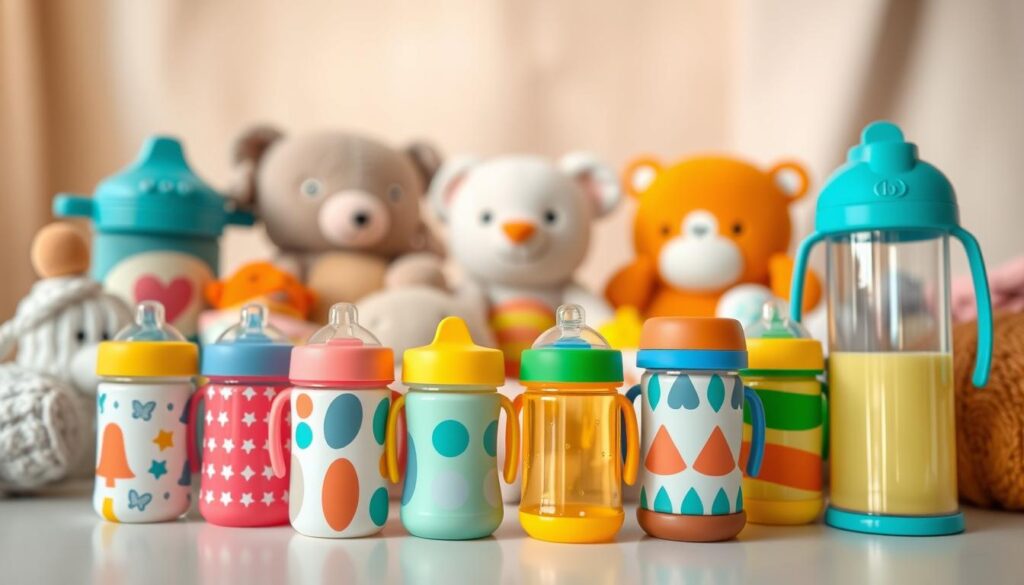
When you launch bespoke baby goods, your pricing model acts as the foundation for your brand’s financial health. Establishing a clear strategy ensures that you cover all operational expenses while remaining attractive to your target audience. A well-thought-out plan helps you navigate the complexities of the competitive baby products market.
Factors Affecting Pricing
Calculating the final cost of your items involves more than just the price of raw materials. You must account for tooling, custom decoration, specialized packaging, and rigorous safety testing. Additionally, logistics such as international freight and import duties play a significant role in your landed cost.
The complexity of your design also influences the final quotation. Higher order volumes often lead to lower per-unit costs, while unique structural requirements or advanced customization may increase the investment needed. Always request a detailed written quotation to ensure transparency in your supply chain.
Competitive Pricing Tactics
To succeed with bespoke baby goods, you should analyze the current market landscape. Compare your product features against industry trends to determine where your brand fits best. Sometimes, offering a premium, highly customized product allows for higher margins, while standard designs may require a more aggressive, volume-based pricing approach.
Consider how your distribution channel impacts your pricing strategy. Selling directly to consumers through e-commerce platforms allows for different margins compared to working with wholesale distributors. Always factor in potential platform fees, return rates, and promotional discounts when setting your retail price.
The Importance of Margin Management
Effective margin management is the key to keeping your business profitable. You must track your landed cost carefully to ensure that your wholesale and suggested retail prices provide a healthy contribution margin. Remember that cash tied up in inventory can impact your liquidity, so balancing stock levels is vital.
| Cost Category | Impact on Price | Management Strategy |
|---|---|---|
| Production & Tooling | High | Optimize via volume |
| Safety & Compliance | Medium | Standardize testing |
| Logistics & Duties | Variable | Plan shipping routes |
| Marketing & Returns | Low | Allocate fixed budget |
If you are ready to refine your pricing for bespoke baby goods, we are here to help. Please share your drawings, material preferences, and packaging requirements with us. You can reach out via email at joan@bebecares.com, visit our website at ijoyren.com, or contact us directly on WhatsApp for a personalized quote.
Customer Feedback and Iteration
Listening to your customers is the most effective way to refine your unique baby accessories. Many brands make the mistake of viewing their first production run as a final product, but true market leaders understand that the real work begins after the launch.
Importance of Customer Reviews
Customer reviews serve as a direct line to the user experience. When parents share their thoughts, they provide insights into how your product performs in real-world settings, such as during mealtime or travel.
Even if your overall ratings remain high, recurring complaints about specific issues like rust, coating quality, or safety perceptions can slowly erode brand trust. Addressing these concerns early prevents minor frustrations from becoming major obstacles to your growth.
Collecting Feedback Efficiently
To gather actionable data, you must look beyond simple star ratings. You should actively monitor feedback regarding leakage, grip comfort, spout softness, and ease of cleaning.
It is also helpful to track reports on odor, material durability, and dishwasher performance. If you need assistance in managing these feedback loops or coordinating with your production team, feel free to reach out to us at ijoyren.com, contact us via WhatsApp, or email joan@bebecares.com for professional guidance.
Iterating Based on Customer Input
Once you have collected data, the next step is to categorize and verify technical issues. Prioritize safety-related findings above all else, as these are critical for maintaining your reputation.
Product teams should work closely with manufacturers to implement measurable design changes. Whether it is updating user instructions or modifying a mold, these iterations ensure your unique baby accessories continue to meet the high standards parents expect.
| Feedback Category | Common Issue | Action Required |
|---|---|---|
| Functionality | Leakage or flow rate | Adjust valve design |
| Durability | Coating wear or rust | Review material specs |
| Usability | Cleaning difficulty | Simplify component parts |
| Safety | Odor or material feel | Conduct lab testing |
Maintaining Quality Control
Protecting your brand reputation starts with rigorous oversight of every batch. When you invest in Private‑Label Toddler Sippy Cups, you must ensure that every unit reaching the consumer is safe and functional. A repeatable quality-control system acts as your primary defense against defects and returns.
Regular Quality Inspections
A robust inspection process begins with the establishment of golden samples that serve as the benchmark for all future production. You should require your factory to maintain detailed batch records and perform consistent in-process checkpoints. This includes mandatory leak testing, precise dimensional checks, and strict appearance standards for every run of Private‑Label Toddler Sippy Cups.
Packaging checks are equally vital to ensure that the final product arrives in pristine condition. By keeping retained samples from each production run, you create a historical record that helps verify quality consistency over time. If you need guidance on setting up these protocols, feel free to reach out at ijoyren.com or contact us via WhatsApp.
Importance of Supplier Audits
Relying solely on submitted certificates is rarely enough to guarantee excellence. You must conduct thorough supplier audits to verify the factory’s internal quality systems and production capacity. These audits should examine worker conditions, material traceability, and the effectiveness of their corrective action plans.
A deep dive into the manufacturer’s operations ensures that they align with your safety standards. Transparency is key to building a long-term partnership that keeps your supply chain secure. For specific inquiries regarding factory standards, you can email joan@bebecares.com for expert advice.
Addressing Quality Issues Swiftly
Even with the best systems, defects can occasionally occur. When a problem arises, the brand and the factory must act with immediate coordination to document containment and identify the root cause. You should never release affected inventory until you have confirmed that the issue is fully resolved.
Once the root cause is identified, agree on a corrective action plan to prevent future occurrences. Confirming these preventative measures is essential before resuming the production of your Private‑Label Toddler Sippy Cups. By handling issues with speed and precision, you maintain the trust of your customers and protect your business growth.
Conclusion and Next Steps
Building a profitable business requires careful planning and a commitment to quality. You now possess the roadmap to navigate the complexities of sourcing and selling Private-Label Toddler Sippy Cups in the United States market.
Success starts by defining your specific needs. Consider your target audience, preferred materials, age ranges, and unique branding requirements. Clear goals regarding your launch date and order quantities will streamline your path to market.
Logistics play a vital role in your supply chain strategy. Express or air shipments typically arrive within 3 to 7 days for urgent needs. Larger sea freight orders usually reach their destination in 35 to 50 days.
Your journey toward offering premium Private-Label Toddler Sippy Cups begins with a conversation. Visit https://ijoyren.com/ to explore our full range of manufacturing capabilities. You can message us directly at https://wa.link/b88mcs or send an email to joan@bebecares.com to request samples and discuss your project specifications.
Our team is ready to help you secure competitive pricing and ensure your products meet all safety standards. Reach out today to start building your brand with confidence.