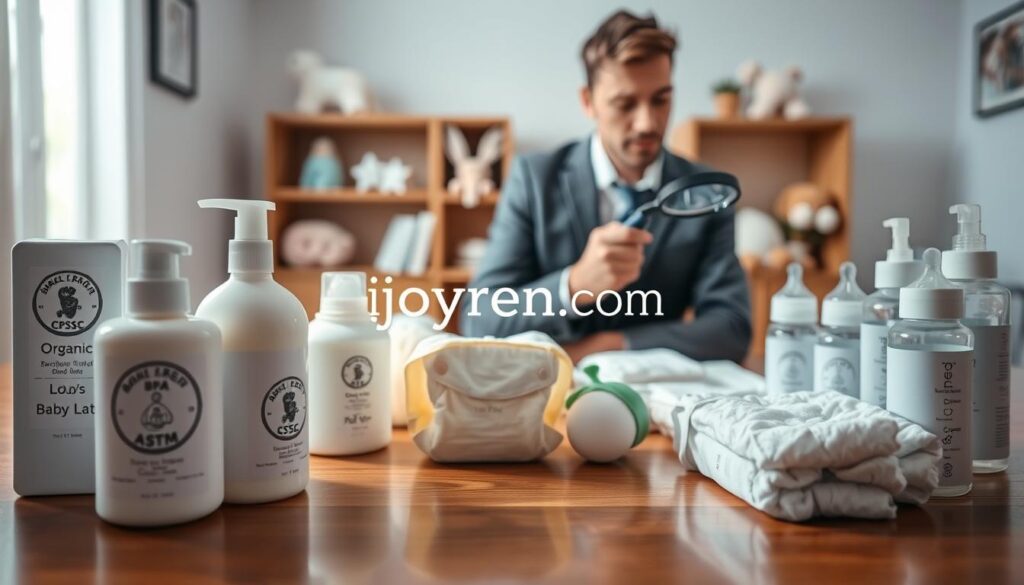
Entering the American market requires more than just a great design. When you source high-quality items, you must ensure they meet strict safety standards. Many entrepreneurs struggle to find reliable private-label baby-suppliers who truly understand these complex regulatory requirements.
Success in this industry depends on more than just comparing price tags. You need partners who provide verified testing records and proper safety documentation for all private-label baby products. Without these essential documents, your goods may face costly delays or even rejection at the border.
We are here to help you navigate these hurdles with confidence. If you need expert guidance on evaluating potential manufacturing partners, please reach out to the team at iJoy Ren. You can visit our website at https://ijoyren.com/, message us on WhatsApp at https://wa.link/b88mcs, or send an email to joan@bebecares.com for personalized support.
Key Takeaways
- Safety certifications are mandatory for selling infant goods in the United States.
- Documentation must include valid testing records and compliant labeling.
- Price is secondary to meeting federal safety and quality standards.
- Working with experienced partners prevents customs delays and legal issues.
- Contact iJoy Ren for professional assistance with your sourcing strategy.
Understanding the Importance of Certifications
Every parent wants the best for their child, which is why formal safety certifications are a non-negotiable standard in the USA. These documents prove that a product, its manufacturing process, and its testing systems meet strict safety and quality requirements. By working with trusted infant product suppliers, businesses ensure that every item—from skincare to nursery furniture—is safe for delicate users.
Why Certifications Matter for Baby Products
Certifications provide a clear roadmap for quality control. They verify that ingredients in lotions are mild and that toys are free from choking hazards. When you prioritize these standards, you demonstrate a commitment to excellence that resonates with American families.
Formal compliance acts as a bridge between your brand and the consumer. It proves that your testing protocols are robust and that your supply chain is transparent. If you need guidance on meeting these high standards, you can reach out to experts at ijoyren.com or contact us via WhatsApp. You may also send inquiries to joan@bebecares.com for professional support.
Consumer Trust and Safety Regulations
Parental confidence is built on the foundation of documented regulatory controls. When trusted infant product suppliers provide verified safety data, they remove the guesswork for parents. This transparency is essential for building long-term loyalty in the competitive US market.
| Feature | Certified Products | Non-Certified Products |
|---|---|---|
| Safety Testing | Rigorous & Documented | Unverified |
| Ingredient Quality | Tested for Mildness | Unknown |
| Market Status | Fully Compliant | High Risk |
| Consumer Trust | High | Low |
Overview of Baby Goods that Require Certifications
When sourcing inventory, identifying the specific regulatory needs for each item is a critical step for any business. Professional baby product manufacturers understand that compliance is not a one-size-fits-all process. Instead, they must evaluate each SKU individually to determine the exact testing protocols required for the United States market.
Types of Baby Goods on the Market
The baby goods industry encompasses a wide variety of items, each serving a unique purpose in a child’s development. Common categories include soft goods like apparel and bedding, as well as hard goods such as nursery furniture and transport equipment like strollers or car seats.
Feeding products, toys, cosmetics, and nutritional items also fall under this broad umbrella. Because these items interact with infants in different ways, the safety standards applied to them vary significantly. For inquiries regarding specific compliance documentation, you can reach out to us at ijoyren.com, contact us via WhatsApp, or email joan@bebecares.com.
Common Categories Requiring Certification
Certification needs are primarily determined by the product’s intended use, the materials used in construction, the target age range, and the overall risk level. For instance, a wooden crib requires different structural testing than a silicone teething toy or a cotton onesie.
Top-rated baby suppliers should never provide a single, generic certificate for an entire catalog of diverse products. A reliable partner will provide specific documentation for each item, ensuring that every piece of inventory meets the necessary federal safety guidelines. By focusing on these granular details, businesses can protect their customers and maintain a strong reputation in the competitive retail landscape.
Key Certifications for Baby Products in the USA
Navigating the complex landscape of safety requirements is essential for anyone launching private-label baby products in the United States. To build a sustainable brand, you must distinguish between voluntary industry standards, mandatory government regulations, and quality management certifications.
ASTM International Standards
ASTM International provides the technical foundation for many safety requirements in the US. While these standards are often voluntary, they are widely recognized as the benchmark for quality and safety in the industry.
Manufacturers of private-label baby products should ensure their items align with specific ASTM protocols. Adhering to these guidelines helps demonstrate that your products are designed with the highest safety considerations in mind.
Consumer Product Safety Commission (CPSC) Regulations
The CPSC enforces strict federal safety rules that every business must follow. A critical requirement is that all testing reports for US-bound goods must be issued by a CPSC-accepted third-party laboratory.
- Factory-internal testing is never accepted as a substitute for official reports.
- Always verify that the laboratory is accredited to perform the specific tests required for your product category.
- Ensure the scope of the certificate matches the exact product you are importing.
ISO Certifications Relevant to Baby Goods
Beyond basic safety, international certifications provide proof of your commitment to quality management and material safety. For instance, ISO 13485:2016 is a gold standard for medical device quality management, which is often relevant for high-end baby care items.
Additionally, certifications like OEKO-TEX Standard 100 verify that textiles are free from harmful substances. If you need guidance on navigating these requirements or finding reliable manufacturing partners, feel free to reach out to us at ijoyren.com. You can also contact us via WhatsApp or send an email to joan@bebecares.com for personalized support.
Overview of ASTM International Standards
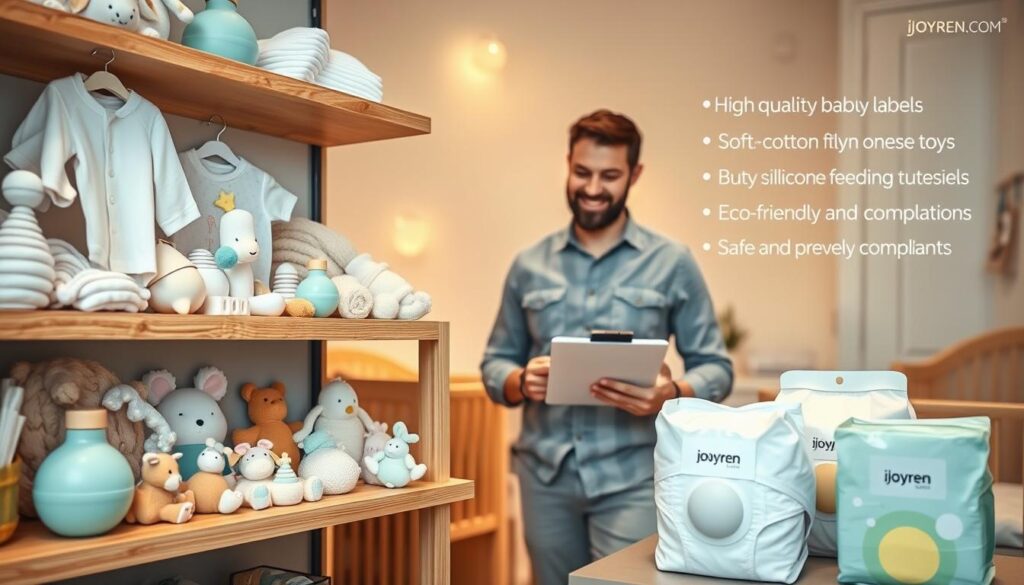
When you source products for your brand, ASTM guidelines serve as the gold standard for safety and performance. These technical requirements provide the framework that laboratories and manufacturers use to evaluate the integrity of various baby goods before they reach the market.
By adhering to these protocols, businesses can ensure they are offering quality private-label baby items that meet high industry expectations. While these standards are often voluntary, they are widely recognized as the benchmark for excellence in product development.
What is ASTM?
ASTM International is a globally recognized organization that develops voluntary consensus standards for a wide range of materials, products, and systems. It brings together experts, manufacturers, and safety advocates to create rigorous testing protocols.
These standards help ensure that products are consistent, reliable, and safe for end-users. For those interested in developing quality private-label baby items, understanding these documents is a critical step in the manufacturing process.
Overview of Specific ASTM Standards for Baby Goods
ASTM standards address a variety of safety concerns, including structural strength, stability, and flammability. They also provide detailed guidance on preventing hazards like small parts ingestion, entrapment, and chemical exposure.
It is important to remember that an ASTM standard does not automatically replace mandatory federal requirements. Instead, these standards often work in tandem with government regulations to provide a comprehensive safety net for infants and toddlers.
If you need assistance navigating these requirements for your business, feel free to reach out to our team at ijoyren.com. You can also contact us via WhatsApp or send an email to joan@bebecares.com for expert guidance on sourcing quality private-label baby items that comply with the latest safety benchmarks.
CPSC and Its Role in Baby Product Safety
Understanding the regulatory reach of the Consumer Product Safety Commission (CPSC) is a critical step for companies aiming to succeed in the American market. This federal agency acts as the primary guardian for children’s product safety, ensuring that every item reaching a nursery meets strict federal standards. Top-rated baby suppliers prioritize these regulations to maintain consumer trust and avoid costly legal hurdles.
CPSC Regulations Explained
The CPSC mandates that all children’s products undergo rigorous testing to prove compliance with safety rules. Manufacturers must issue a Children’s Product Certificate (CPC) based on the results of these tests. This document serves as official proof that the item is safe for its intended use.
Beyond testing, the agency requires permanent tracking information on both the product and its packaging. This allows for efficient recalls if a safety hazard is discovered later. Furthermore, proper age grading is essential, as it helps parents identify whether a product is developmentally appropriate for their child.
How CPSC Affects Product Design and Testing
Safety must be integrated into the product design phase long before manufacturing begins. By identifying potential hazards early, companies can implement design changes that prevent injuries. Top-rated baby suppliers often consult with experts to ensure their designs align with current CPSC mandates.
Operational requirements are also evolving, particularly with the upcoming 2026 CPSC eFiling change. This update will require importers to submit compliance data electronically, streamlining the entry process for goods entering the United States. Staying ahead of these digital shifts is vital for maintaining a smooth supply chain.
If you need guidance on navigating these complex requirements, feel free to reach out for professional support. You can visit ijoyren.com, contact us via WhatsApp, or send an email to joan@bebecares.com for more information on compliant manufacturing.
Compliance with Federal Regulations
For those involved in the baby goods industry, mastering federal regulations is not just a legal requirement but a commitment to child safety. Navigating the complex landscape of United States safety rules is a vital step for any business looking to distribute high-quality items. Whether you are a new brand owner or one of the established wholesale baby product suppliers, understanding these mandates is essential for long-term success.
Overview of Federal Regulations for Baby Products
Federal oversight in the United States ensures that every item intended for infants meets rigorous safety benchmarks. Responsible businesses must proactively identify all applicable rules, arrange for third-party laboratory testing, and maintain detailed technical records. These steps are not optional; they are the foundation of a compliant supply chain.
“Safety is not a luxury; it is the fundamental right of every child and the primary responsibility of every manufacturer.”
When working with wholesale baby product suppliers, it is crucial to verify that all documentation is in order. You must be prepared to issue a Children’s Product Certificate (CPC) for every item. If you need guidance on these technical requirements, you can reach out to the team at ijoyren.com or contact them via WhatsApp for direct support. You may also send inquiries to joan@bebecares.com to ensure your inventory meets all federal expectations.
Importance of Compliance for Manufacturers
Compliance protects your brand from costly recalls and legal liabilities that can devastate a business. Furthermore, it ensures that your products move through customs without unnecessary friction. Importers and wholesale baby product suppliers should be aware that export inspections can lead to a seven-to-ten-day delay in the supply chain.
Planning for these potential delays is a critical part of your inventory management strategy. By staying ahead of testing protocols and documentation, you can avoid these bottlenecks during your US product launches. Maintaining a proactive approach to safety regulations will ultimately build lasting trust with your customers and retail partners.
Labeling Requirements for Certified Baby Goods
When you partner with the best baby product suppliers, you ensure that every detail on your packaging meets federal standards. Proper labeling is not just a formality; it is a legal requirement that protects your business and your customers. Even if a product passes rigorous laboratory testing, incorrect packaging can lead to customs seizures, costly product recalls, and serious safety risks.
Essential Labels and Information
To comply with United States regulations, your packaging must be clear, permanent, and easy to read. You should work closely with your manufacturing partners to ensure that US-specific artwork is used rather than generic international packaging. This ensures that all mandatory information is presented in the correct format for the American market.
Key elements that must appear on your product packaging include:
- Product Identity: A clear description of what the item is.
- Manufacturer/Importer Details: Full contact information for the responsible party.
- Tracking Information: A permanent code that allows for product tracing.
- Safety Warnings: Specific language required by CPSC standards.
- Care Instructions: Guidance on how to maintain the product safely.
- Country of Origin: Clear identification of where the goods were manufactured.
| Label Element | Purpose | Regulatory Requirement |
|---|---|---|
| Tracking Label | Traceability | Mandatory for all children’s products |
| Warning Labels | Risk Mitigation | Specific to product type (e.g., suffocation) |
| Manufacturer Info | Accountability | Required for customs and recall tracking |
Importance of Accurate Labeling
Accurate labeling acts as the final line of defense for consumer safety. Clear communication on packaging helps parents understand how to use products correctly, which significantly reduces the risk of accidents. When labels are missing or incorrect, you risk losing the trust of your customers and facing severe regulatory penalties.
“Safety is not just about the physical integrity of a product; it is about the clarity of the information provided to the end user.”
If you are looking for guidance on how to ensure your packaging meets these strict standards, reach out to the best baby product suppliers for support. You can visit ijoyren.com, contact us via WhatsApp, or send an email to joan@bebecares.com. Taking these steps early will save your brand from unnecessary complications in the future.
Testing Procedures for Certifications
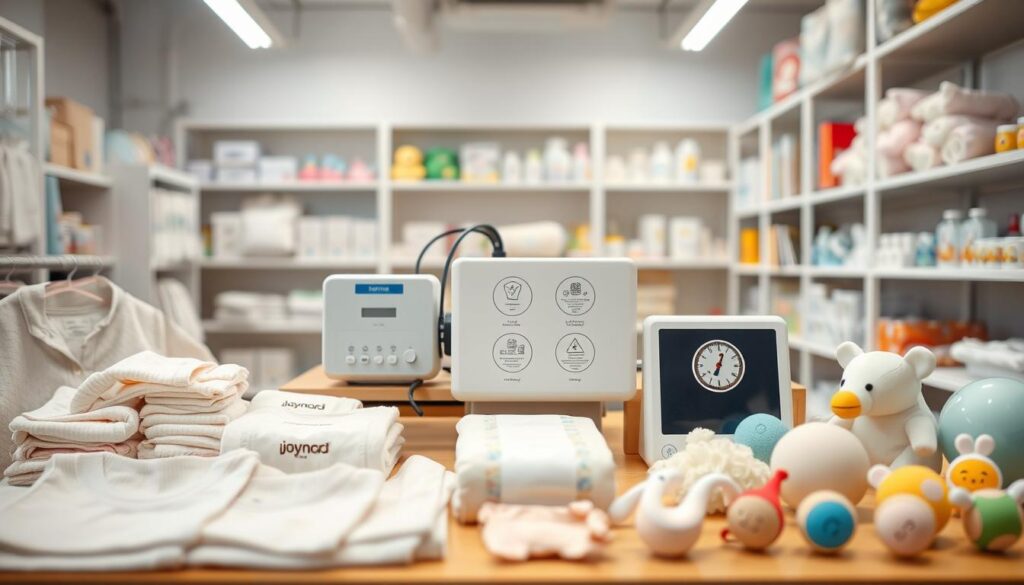
Establishing a reliable testing protocol is the backbone of bringing safe baby goods to the US market. Manufacturers must follow a structured workflow to ensure that every item meets federal safety requirements before it reaches the end user.
This process begins with defining clear product specifications. Once the design is finalized, the manufacturer creates samples for laboratory evaluation. These tests confirm that the quality private-label baby items align with the documentation provided to retailers and importers.
Overview of Testing Protocols
A robust testing workflow is essential for maintaining compliance throughout the manufacturing lifecycle. It starts with a thorough review of materials and design blueprints to identify potential hazards early in the development phase.
After the initial design phase, independent laboratories conduct rigorous testing on physical samples. This step is crucial for verifying that the product meets all safety standards. If you are looking for guidance on specific standards, you can learn more about what certifications matter for baby clothing to ensure your inventory is fully compliant.
Once the product passes laboratory testing, production controls are implemented to maintain consistency. Finally, a pre-shipment inspection serves as the last line of defense. This ensures that the bulk production matches the quality of the tested samples.
Types of Tests Required for Certification
Different baby products require specific testing categories based on their intended use and materials. Mechanical safety is a primary concern, focusing on small parts that could pose choking hazards or sharp edges that might cause injury.
Chemical composition testing is equally vital, especially for items that babies might put in their mouths. Laboratories check for lead, phthalates, and other restricted substances to ensure the safety of quality private-label baby items.
Other common testing categories include:
- Flammability: Ensuring fabrics and materials meet fire safety standards.
- Durability and Structural Performance: Testing the integrity of cribs, strollers, and high chairs under stress.
- Textile Substances: Analyzing dyes and finishes for harmful chemicals.
By adhering to these strict testing procedures, businesses can confidently deliver quality private-label baby items to the United States. If you need assistance with your compliance journey, feel free to visit ijoyren.com, reach out via WhatsApp, or send an email to joan@bebecares.com for expert support.
International Certifications Impacting the USA Market
Navigating the world of baby product safety requires a clear understanding of how international standards interact with American regulations. Many wholesale baby product suppliers provide documentation from various global bodies to prove their commitment to quality. However, it is essential to recognize that these documents serve as a starting point rather than a final legal clearance for the United States.
Understanding Global Standards
International certifications like CE, OEKO-TEX, ISO, and FSC are widely recognized markers of manufacturing excellence. These standards often focus on environmental impact, material safety, and social responsibility within the factory environment. Reliable partners often use these credentials to demonstrate that their production processes meet high-level global benchmarks.
For instance, OEKO-TEX certification ensures that textiles are free from harmful substances, which is a great indicator of quality. Similarly, ISO certifications reflect strong management systems. While these are excellent for screening potential wholesale baby product suppliers, they do not automatically authorize a product for sale in the American market.
How International Certification Affects US Sales
It is a common mistake to assume that a product meeting European or Asian standards is automatically compliant with CPSC regulations. The United States maintains its own rigorous testing, labeling, and registration requirements that are distinct from international norms. You must ensure that your goods undergo specific American laboratory testing to meet federal safety mandates.
Think of international certifications as supplementary evidence of a supplier’s capability. They help build trust, but they cannot replace the mandatory compliance steps required by US law. If you need guidance on bridging this gap, you can reach out to us at ijoyren.com, contact us via WhatsApp, or email joan@bebecares.com for expert advice.
| Certification Type | Primary Focus | US Market Status |
|---|---|---|
| ISO/CE | Quality Management | Not a substitute for CPSC |
| OEKO-TEX | Textile Safety | Helpful, but requires US testing |
| FSC/Social | Sustainability/Ethics | Good for brand reputation |
| ASTM/CPSC | Mandatory Safety | Required for all US sales |
Ultimately, the best wholesale baby product suppliers are those who understand both global quality standards and the specific legal landscape of the United States. By balancing these two areas, you can ensure your business remains both competitive and compliant.
Tips for Businesses Seeking Certifications
Securing the right certifications for your inventory is a critical step in building a successful baby goods brand. When you Find Reliable Private-Label Baby-Suppliers, you lay the foundation for long-term growth and consumer safety in the United States.
Steps to Obtain Required Certifications
The process begins with a clear classification of your product category. Once you identify the specific safety standards, you must evaluate potential baby product manufacturers based on their technical capabilities.
A professional partner should provide transparency throughout the production cycle. Consider these essential steps when vetting your partners:
- Verify their laboratory access and current certification scope.
- Request detailed production records and sample quality reports.
- Confirm their ability to provide compliant labeling support.
- Review their minimum order quantities and inspection protocols.
For those seeking expert guidance, you can reach out to specialized teams at ijoyren.com or contact them via WhatsApp. You may also send inquiries to joan@bebecares.com for specific compliance advice.
Common Pitfalls to Avoid
Working with trusted infant product suppliers is vital, but you must remain vigilant against common industry shortcuts. Never accept documentation that appears suspicious or incomplete.
Avoid these dangerous mistakes during your selection process:
- Copied or expired certificates: Always verify the authenticity of documents directly with the issuing lab.
- Unclear scopes: Ensure the certification covers the exact materials and age range of your product.
- Unsupported claims: Be wary of manufacturers who promise compliance without providing verifiable test reports.
- Aggressive payment terms: Avoid suppliers who demand the entire first order payment upfront before verifying production quality.
Due diligence is your best defense against regulatory issues. By maintaining open communication and demanding proof of compliance, you protect your brand and your customers.
Conclusion: Navigating Baby Goods Certifications
Launching a brand requires a deep commitment to safety and regulatory precision. Every SKU for private-label baby products must align perfectly with ASTM standards and CPSC obligations to ensure a smooth entry into the United States.
Maintaining rigorous testing records and clear labeling protects your business and your customers. Partnering with the best baby product suppliers makes this complex process manageable. These experts provide verified laboratory reports and support compliant packaging for every shipment.
Building a Reliable Supply Chain
Top-tier partners assist with pre-shipment inspections to guarantee that every item meets federal rules. You gain peace of mind when your manufacturing team understands the full scope of certification requirements.
Reach out to iJoy Ren for professional guidance on your next project. You can visit the website at https://ijoyren.com/ to explore our services. Connect with us via WhatsApp at https://wa.link/b88mcs or send an email to joan@bebecares.com to start your journey toward a safer and more successful product launch.